Volvo L110F / L120H Wheel Loader Spare Parts — Wear Parts List for African Quarry Duty (2026)
What actually wears out first on an L110F / L120H
A wheel loader spends its life doing the same four motions: crowd, lift, carry and dump. Every one of them loads a different group of parts, and in a granite or laterite quarry the load is roughly double what you would see on a stockpile job. This is the failure order we see most often in export orders:
| Group | Parts involved | Typical symptom | Check |
|---|---|---|---|
| Bucket / GET | Teeth, adapters, edge blade, side cutters | Bucket will not fill, fuel burn climbs | Measure tooth height, look for adapter play |
| Hydraulic drive group | Main pump, charge pump, accumulator, solenoid valves | Slow lift, jerky tilt, drifting boom | Pressure test at rated rpm |
| Articulation frame | Articulation bearings, pins, thrust washers | Clunk on full lock, wander on the haul road | Rock the frame with the engine off |
| Brake / axle | Brake packs, differential seals, wheel bearings | Pulling to one side, hot hub | Feel hub temperature after a shift |
| Filters and fluids | Engine oil, fuel, hydraulic return, breather | Slow drift into overheating | Log pressure drop every 250 hours |
Why African quarry duty shortens every interval
- Abrasive dust: fine quartz dust gets past a tired air filter and turns engine oil and hydraulic oil into lapping compound. In practice that halves both intervals.
- High ambient temperature: hydraulic oil that sits above its design window hardens seals, thinning the margin before leaks show up.
- Continuous short cycles: loaders feeding a crusher never cool down; the pump and the torque converter run hot all shift.
- Rock-loaded buckets: high-impact loading cracks teeth and bends edge blades rather than wearing them evenly.
The practical answer is not to buy bigger parts; it is to shorten inspection intervals by about a third and keep one set of GET to swap in while the other is rebuilt.
Never order by model name alone
L110F and L120H are close relatives, but axle ratios, pump displacements and even pin diameters were revised across production years. The only reliable key is the machine serial number. Send us three photos: the machine plate (serial number visible), the part nameplate / stamping on the old part, and the installation position. We cross-check the part number against the serial break before quoting, which removes most "looks right but does not fit" cases.
Wear parts we ship most often for these two loaders
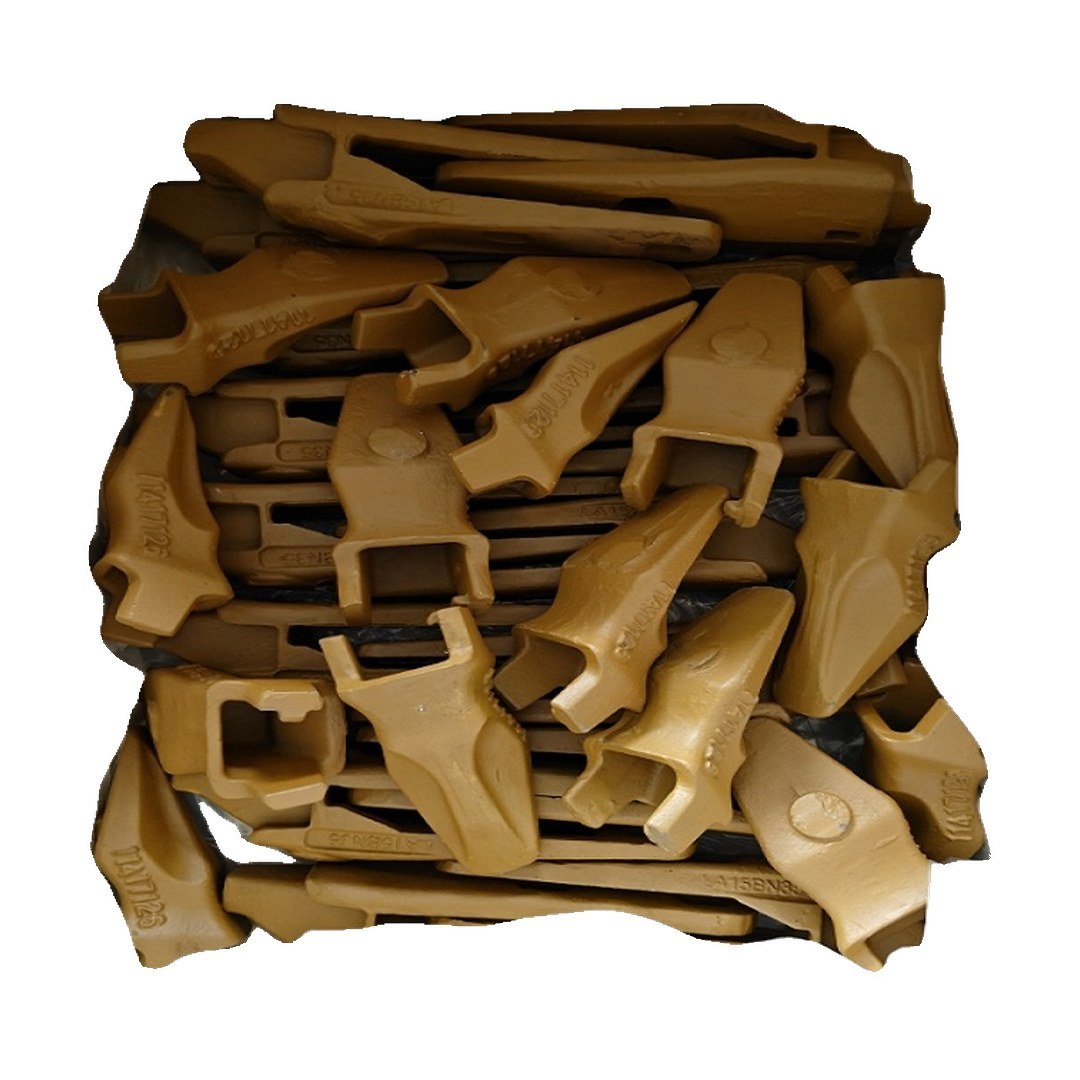
- Bucket teeth and adapters: the cheapest uptime insurance there is. The L120G / L120F platform commonly uses 11417126 bucket teeth; send a photo of one tooth plus the adapter to confirm the lock type.
- Edge blades and side cutters: a bent edge blade changes the whole cutting geometry. 11012887 edge blade is used across the L110G / L110H / L120H range — confirm length and bolt pitch before ordering.
- Charge / hydraulic oil pump: low charge pressure is the root cause of most "slow hydraulics" complaints. The 15093008 oil pump covers L90 through L250 wheel loaders; always verify rotation and port layout.
- Solenoid and control valves: intermittent steering or tilt faults are usually electrical, not mechanical. Check the connector and coil resistance before replacing the pump — 15097457 hydraulic pump solenoid valve is a frequent culprit.
- Accumulators: a dead accumulator turns every pump pulse into hammer in the lines. The 11173693 accumulator is fitted across L90C to L180C loaders; check nitrogen pre-charge before condemning the pump.
Articulation and hydraulics: the two systems that actually stop you
Most loaders in a quarry do not stop because the engine failed. They stop because the frame articulation developed play, or because the hydraulics went soft. Both are progressive and both give you weeks of warning. A weekly five-minute check — engine off, frame rocked by hand, plus a pressure reading at rated rpm — catches roughly eight out of ten imminent failures before they become downtime.
Filters and fluids: the cheapest uptime you can buy
In dusty regions we recommend cutting the standard interval by about a third and treating every filter change as an oil inspection: look at what is in the filter, not just whether it is clogged. Bronze flecks mean rotating assemblies are wearing; rubber debris means a hose is degrading upstream. That single habit prevents most of the catastrophic failures we get asked to quote replacements for.
Quotation, packing and shipping to Africa
Send the part number, the serial number and a photo — we confirm fitment, stock status and send warehouse photos before you pay. Small parts go by international courier; pumps, adapters and structural parts are crated or palletised (heat-treated / ISPM-15 free where required), with machined faces protected separately. Every shipment comes with a packing list showing per-piece dimensions and weights, plus a loading video before departure. Consolidating several lines into one container usually cuts the landed cost per piece noticeably.
FAQ
Can I order an L110F part using only the model name?
No. Serial-number breaks changed axle ratios, pump displacements and pin diameters across production years. Send the machine plate and the stamping on the old part so we can cross-check the exact part number before quoting.
How do I tell a hydraulic problem from an electrical one?
Test charge pressure at rated rpm first. If pressure is on spec but the function is erratic or intermittent, suspect the solenoid, its connector or its coil before replacing the pump. Readingless or obviously low pressure points to the pump group.
Do you ship completesets of bucket teeth and adapters?
Yes. We ship sets together with the matching keepers and pins. Send a photo of one tooth and the adapter so we can confirm the lock type before shipment.
What proof do I get before the goods leave?
Warehouse photos, nameplate close-ups, a packing list with per-piece dimensions and weights, and a loading video. Large orders can be inspected by a third party.
Need L110F / L120H parts priced?
Send the serial number and the old part number — we confirm stock and send photos the same day.

WhatsApp +86 139 2519 9399 · Scan and send your part number, or open the chat directly